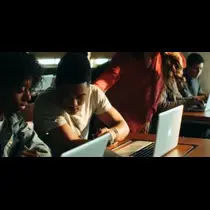
How one student’s experience highlights the need for a more inclusive, skills-based approach to post-secondary preparation.

For some students, college is the assumed ‘next step’ - a foregone conclusion. For others, it feels entirely irrelevant. With this in mind, it’s logical to assume that K-12 College and Career Readiness (CCR) initiatives would thus balance these two schools of thought, right? In theory, yes. In practice – the reality for most districts is far from it.
I want to share with you a story about a former classmate of mine (for the purposes of this article we will call him Marcus) and how our experience shaped my view on what true readiness means…
From the moment I was first enrolled in pre-school, all the way up to the day I walked across the stage at our 12th grade graduation ceremony, my parents laid the foundation for college to be my natural path after high school. So much so, that there was never a point where I ever questioned whether or not I wanted to go to college.
So, naturally, when we had our recurring ‘college essay writing’ blocks in 11th grade English (which was part of our school’s CCR strategy), I never questioned why we were engaging in this activity. I questioned which school I’d be applying to, which major I wanted to pursue, and what I wanted to include in my essay submission… but never once whether or not this was a valuable use of my time.
Contrast this mindset with my desk neighbor, Marcus, who played alongside me on the baseball team. As strong as he was on the field, with an impressive batting average and golden-glove fielding, his classroom “stats” were some of the weakest in our entire class: low assignment completion percentage, high truancy rates, and even higher write-ups for disruptive in-classroom behavior.
In hindsight, I understand that this was because Marcus asked himself the question that had never crossed my mind – “was our English college & career readiness block a valuable use of my time?”, and for him, the answer was a clear and resounding “not at all.”
Marcus didn’t see how this activity applied to his future, and our school didn’t show him otherwise.
The same was true when we took the PSAT. I showed up to the gymnasium with several sharpened #2 pencils, my calculator equipped with a new pair of batteries, and in possession of several snacks to hold me through the morning. Marcus, meanwhile, borrowed a pencil, forgot his calculator, and doodled on his scantron, seeing little connection between the exam and his future.
This story is not to suggest that Marcus wasted an opportunity to prepare himself for a college pathway, nor is it to suggest that college is the best option for all students. What is clear, however, is that Marcus viewed these dozens of College & Career Readiness hours as a complete waste of his time.
Why? Because our school didn’t prioritize highlighting to us the ways in which the skills we were practicing during our ELA writing blocks and/or the foundational skills covered on the SAT would serve him well into the future. What he perceived instead was a clear message that: this only applies to you if you plan on attending college.
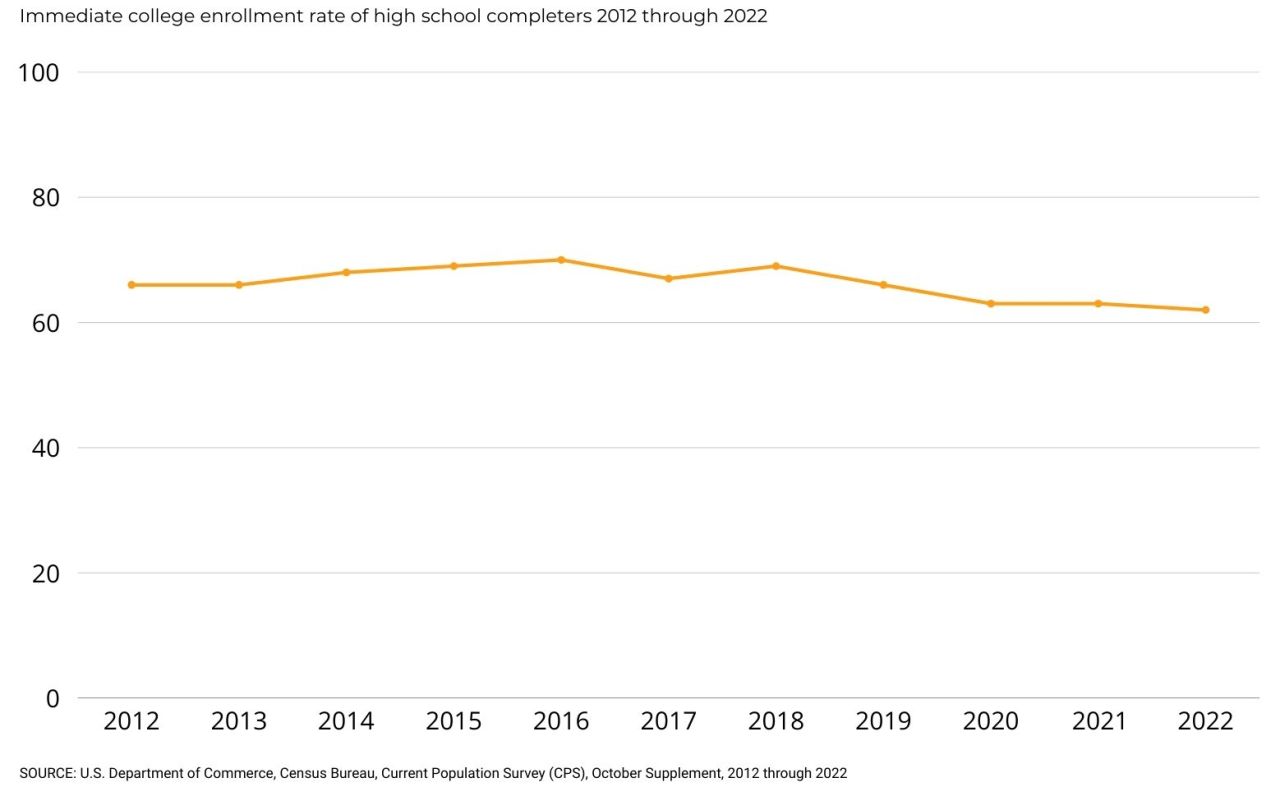
Marcus’s story reflects a larger issue: when CCR programs focus too narrowly on college, they risk alienating students whose aspirations lie elsewhere. And Marcus’s story is not unique. Across the country, students disengage from CCR programs because they fail to see their relevance. But there’s a better way - one that connects universal skills to real-world opportunities for every student.
As I witnessed firsthand with Marcus, many students feel alienated by language or lessons too focused on the ‘college’ aspect of CCR. Students begin to disengage because they don’t see relevance to their personal goals and aspirations. This may be a result of teachers finding it difficult to differentiate their lesson plans or activities for students’ multiple pathways, which makes balancing both college-prep and career-prep seem like an impossible task. Ultimately, many default to focusing on either college or career readiness in their lesson planning, rather than balancing both.
This is a huge miss, as in reality, many universal skills such as communication, problem-solving, and creativity are all vital regardless of a student’s future plans.
For example, did you know that studying for the SAT improves skills linked to success in obtaining industry certifications such as Certified Supply Chain Professional (CSCP), Professional in Human Resources (PHR), Marketing Analytics, and more? Many companies even offer scholarships or funding for employees who do well on standardized tests, which can cover the costs of certifications in fields like IT and healthcare. The military even has scholarships and advanced training programs that are more accessible when receiving higher SAT scores. Never once was this information shared with Marcus during our CCR blocks or PSAT study hours.
[ChalkTalk’s curriculum explores these connections directly, helping students see how SAT prep supports everything from military advancement to certification pathways. You can explore those curriculum examples here.]
Working at ChalkTalk gives me the opportunity to connect daily with K-12 administrators from across the country. Although my personal experience with Marcus happened over 15 years ago, many of the educators I connect with now share similar stories of students feeling alienated or disengaged when the College & Career Readiness discussion arises.
Marcus’s disengagement underscores a systemic issue - but it’s one that schools can address by broadening their approach to readiness.
Reflecting back on my time in the classroom with Marcus, I cannot help but think – what if we had framed our essay-writing lesson block differently? Instead of focusing solely on college essays, we could have introduced it as a skill for persuasive communication, perhaps relevant to writing a job application, pitching an idea, or simply expressing a different point of view effectively.
Using real-world examples that do not solely emphasize college would have been a great way to accomplish this in a practical manner. Imagine if we had asked Marcus his ideal career pathway – and then framed the assignment towards highlighting transferable skills like collaboration, adaptability, and time management?
For today’s generation of students, this could include drafting start-up business proposals, or even creative pitches for digital platforms like TikTok or YouTube. This way, students see immediate applicability, which increases engagement and motivation.
My lived experience with Marcus gave me a clear understanding of what poor student engagement can look like in College & Career Readiness. Fortunately, I have also witnessed schools across the country, like many of ChalkTalk’s partners in Texas, Florida, Illinois, and beyond, who have found creative ways in which to engage their students in an inclusive manner.
This includes collaborating with local businesses, trade schools, and community organizations to demonstrate how foundational skills (for which they will be studying as they prepare for the end of course exams, such as English 10 and Algebra 1 EOCs) are applied in the workplace. This also includes introducing SAT, ACT, and TSIA2 preparation workshops and bootcamps with an overview of precisely how the skills they are mastering apply to a wide variety of real-world career pathways.
Every student deserves to feel seen and supported in their journey, whether it leads to a college campus, a baseball field, a workplace, or somewhere in between. When readiness is universal, it empowers students to unlock their potential - wherever their path may lead. Let’s work together to broaden readiness from a narrow track to a transformative bridge, preparing every student for success on their own terms!
We would love to hear how your campuses are making CCR more inclusive and engaging for all students. Share your ideas with us or explore how ChalkTalk is helping districts across the country reimagine readiness through read-world connections and authentic student engagement here.
– Laurence